Showing posts with label ilokano food. Show all posts

January 4, 2015

alukon leaves stew with smoked fish


Well, yeas, of course, the leaves of the alukon (allaeanthus glaber), also alokon, bungon, baeg, himbabao, is also edible, and is a great leafy green for an Ilokano dinengdeng. It's not just the flowers, you see. 

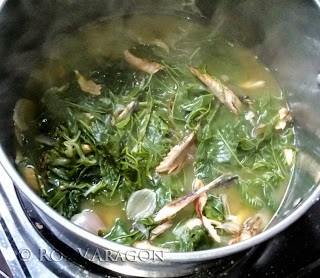
Here's one tasty dinengdeng using alukon leaves only, made more delicious and flavorful with smoked fish (tinapa):


Cooking this Ilokano dish is simple. Just boil bugguong first, with some onion slices and then put in the washed leaves and the flaked tinapa into the boiling broth:

Simmer for a few minutes....


And it's done:


Serve the dinengdeng immediately while hot and steaming, the smoky aroma is so overwhelming it makes you salivate:


Here. it's perfect for your steamed rice, old or newly cooked. The broth is so tasty, perfect for a hearty labay:


November 7, 2013

straw mushrooms soup with patola and wild bittermelon


Mushrooms, mushrooms! And what’s more delicious than those growing and picked from the wild, like these gorgeous straw mushrooms (locally called uong garami or uong saba):

And paired with these equally wild or “native” vegetables for a truly exotic veggie delicacy—wild bittermelon (balang a paria) shoots and fruit, and patola (sponge gourd, kabatiti):

Small but insanely bitter vegetable fruit to challenge or tantalize your palate:


Cooked in the traditional Ilokano dinengdeng way, here’s the eventual result—all that mushroom flavor with the double dose of exotic wild paria bittery goodness and sweetened by the native kabatiti, all in fusion with the essence of bugguong (fish paste/sauce):


See more mushroom treats and recipes:

  • Uong ken lantong-utong, wild mushroom with young bean stalks/shoots
  • Dinengdeng nga uong-mais ken uggot-marunggay, wild mushrooms and marunggay leaves
  • Dinengdeng nga uong-bunton ken balang a paria, wild mushroom soup with bitter melon leaves


  • ~~~~~

    September 17, 2013

    eel


    Igat (eel, palos in Tagalog) is a kind of delicacy preferred by some connoisseurs who swear it has some good aphrodisiac quality, and also considered as gourmet or exotic even by some culinary adventurers because eel is an expensive fish in some parts.

    In the Philippines, igat is usually cooked somewhat dry as in paksiw (soured), adobo, or with coconut milk. Some like it with a little soup or broth and they cook it as sinigang. It's also perfect for daing or salted/dried/smoked, or just simply grilled.

    Sinigang nga igat in Bagabag, Nueva Vizcaya. Photo credit: makan: igat sadiay bagabag


    Paksiw nga igat in Tabuk City, Kalinga. Photo credit: makan: igat with beer


    A huge dried eel at for sale in Tuguegarao City. Photo credit: makan: daing nga igat


    ~~~~~


    September 11, 2013

    kilawen a kalding (goat "salad")


    This is "kilawen a kalding" ("kilawing kambing" in Tagalog) or goat's singed/burnt skin and grilled meat and liver chopped and spiced and made into a kind of "salad." An Ilokano dish, it's kind of "exotic" to others but is a popular goat dish throughout the Philippines. What's distinctly Ilokano about it is that Ilokano folks, used to bitterness, err, bitter food, usually season it with the goat's bile or the pespes (extract of the undigested grass) itself.


    Let's take a look at the mystery of this authentic Ilokano delicacy... Here's the goat's skin/hide, its hair singed, cleaned, this is slightly boiled to tenderize the hide:


    And this is the meat and the liver, slightly grilled and so it's succulent and sweet:


    Chopping time!


    Chopped goat goodies:

    And spiced with onions, ginger, salt, some vinegar (calamansi juice is better), chili if you prefer it really spicy, and pour in some bile or pespes and thoroughly mix the whole lot:


    More...


    ~~~~~

    August 21, 2013

    goat intestines stew


    This is goat intestines stewed, literally, with its own juice--the extract of the masticated grass inside the intestines. It's a savory, bitter soup favored by Ilokanos in the Philippines and all over. And goat's is prized for this kind of exotic dish, called "pinapaitan", aside from beef or carabao (water bufallo). It's not really an exotic one as this is so common in the Philippines especially in the Ilocos or Ilokano-speaking areas in the country.


    The boiled/tenderized whole intestines being cut into bite pieces:


    More pinapaitan tales:


    :::::


    February 19, 2012

    frog adobo


    I really, really miss this! It's been eons ago since my last consumption of this amphibian delicacy, that was tinola a tukak (its Ilokano name; palaka in Tagalog), froggie soup with tender chili leaves. Frog, the edible ones, is a regular fare throughout Asia, "frog legs are a delicacy in China, France, Indonesia, the Philippines, the north of Greece and in many parts of the American South, especially Louisiana," according to Wikipedia.  For some, it takes a lot of guts, will & determination, to convince them to even taste it, so much so that this food has become kind of exotic.

    This is frog adobo, Ilokano version, and I'm dying, green, with envy, what with those bugi (roe) so beautifully intact!

    Photo credit: blauearth.com
    I want this ASAP!

    Come on, we'll try the recipe at the popular Blau Earth blog!


    :::::


    February 16, 2012

    salsa


    (from Simple Recipes and Our Best Bites)

    Actually, Pinoys have their own fresh salsa, sliced tomatoes (kamatis) with grated green mango and sliced onions dressed with patis (fish sauce) or salted shrimp paste (bagoong alamang). The Ilokanos especially has it with bugguong (salted/fermented fish) and they fondly call it as KBL (kamatis, bugguong, lasona; not to mistake as the old political party of the late Apo Marcos).

    Photo credit: ourbestbites.com

    Photo credit: simplyrecipes.com

    But I want the real Mexican fresh salsa there is, I'll note it on my recipes-to-do list, and maybe dress it with bugguong juice instead of just simply salt to taste.

    Here is a simple fresh salsa recipe from Simple Recipes and from Our Best Bites.


    :::::